
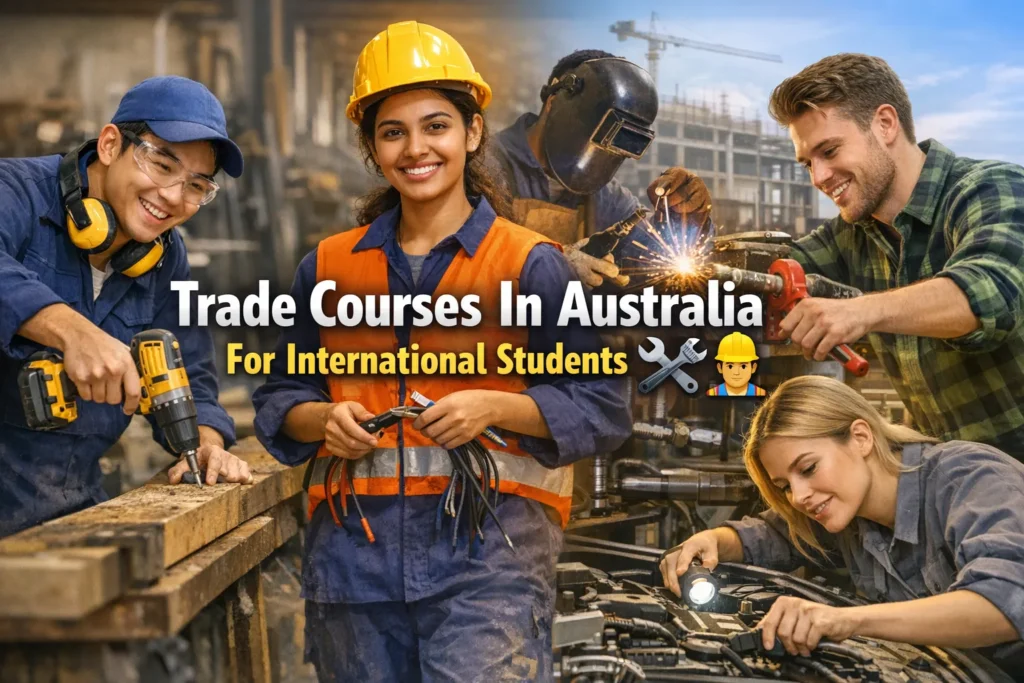
Australia is known for its high-quality education system. For international students interested in practical skills and hands-on training, trade courses provide a great pathway into a rewarding career. These courses are recognised worldwide and offer fast-tracked entry into industries like construction, hospitality, automotive, and more.
In this guide, we explore the best trade courses in Australia for international students, admission requirements, costs, and everything else you need to know.
What are Trade Courses?
Trade courses, also known as Vocational Education and Training (VET), are practical programs focused on specific industries. These courses are designed to equip students with job-ready skills rather than academic theory.
They are commonly offered at Technical and Further Education (TAFE) institutions and Registered Training Organisations (RTOs).
Why Study a Trade Course in Australia?
Studying a trade course in Australia comes with many benefits for international students:
- Industry-Relevant Training: Courses are aligned with current industry needs.
- Pathway to Employment: High demand for skilled workers in several trades.
- Post-Study Work Visas: VET courses can lead to Temporary Graduate visas (subclass 485).
- Affordable Tuition Fees: Compared to universities, trade courses cost less.
- Path to Permanent Residency (PR): Some trade occupations are on the Skilled Occupation List (SOL).
Popular Trade Courses for International Students
Here’s a list of in-demand trade courses for international students in Australia:
| Trade Course | Duration | Job Outcome | Avg Salary (AUD) |
|---|---|---|---|
| Certificate III in Carpentry | 2 years | Carpenter | $60,000–$85,000 |
| Certificate III in Automotive Technology | 2 years | Automotive Mechanic | $55,000–$80,000 |
| Certificate III in Plumbing | 2 years | Plumber | $60,000–$90,000 |
| Certificate IV in Commercial Cookery | 1.5–2 years | Chef, Cook | $45,000–$70,000 |
| Certificate III in Electrical | 2–3 years | Electrician | $65,000–$95,000 |
| Certificate III in Wall and Floor Tiling | 1.5–2 years | Tiler | $50,000–$75,000 |
| Certificate III in Painting and Decorating | 1.5–2 years | Painter | $50,000–$70,000 |
Source: Australian Government Job Outlook – https://joboutlook.gov.au
Entry Requirements for Trade Courses
International students must meet specific eligibility criteria:
- Age Requirement: Minimum 18 years old.
- English Language Proficiency: IELTS overall score of 5.5 or equivalent.
- Educational Qualification: Year 10 or Year 12 completion (varies by course).
- Student Visa (subclass 500): Must apply for a student visa with a valid Confirmation of Enrolment (CoE). Visit the Australian Government’s official site for details: https://immi.homeaffairs.gov.au/visas/getting-a-visa/visa-list/student-500
Cost of Trade Courses in Australia
Study costs vary based on course length and institution.
| Course Type | Tuition Per Year (AUD) | Other Costs (Books, Uniforms) |
|---|---|---|
| Certificate III/IV | $7,000–$15,000 | $500–$2,000 |
| Diploma Level | $10,000–$18,000 | $500–$2,500 |
Most colleges also charge an enrollment fee (around $200–$500). Check directly with institutes for accurate pricing.
Best Institutions Offering Trade Courses in Australia
Below are some reputable institutions offering trade qualifications:
- TAFE NSW – https://www.tafensw.edu.au
- TAFE Queensland – https://tafeqld.edu.au
- Victoria University Polytechnic – https://www.vupolytechnic.edu.au
- South Metropolitan TAFE (WA) – https://www.southmetrotafe.wa.edu.au
- Box Hill Institute – https://www.boxhill.edu.au
These institutions offer CRICOS-registered courses, allowing international students to apply for visas.
Possible Career Outcomes After Completing Trade Courses
Completing a trade course can lead to the following employment outcomes:
- Carpenter
- Plumber
- Chef or Cook
- Electrician
- Automotive Mechanic
- Tiler
- Welder
- Painter
Many of these roles fall under Australia’s skilled shortage list, improving your chances of obtaining work and even applying for permanent residency.
Refer to the latest Skilled Occupation Lists for more information:
https://immi.homeaffairs.gov.au/visas/working-in-australia/skills-assessment
Can Trade Courses Lead to Permanent Residency?
Yes, many trade occupations are on the Medium and Long-term Strategic Skills List (MLTSSL), which makes them eligible for General Skilled Migration (GSM) visas like:
- Subclass 189 – Skilled Independent Visa
- Subclass 190 – Skilled Nominated Visa
- Subclass 491 – Skilled Work Regional Visa
To apply, you’ll need a skills assessment from the relevant assessing authority such as Trades Recognition Australia (TRA) –
https://www.tradesrecognitionaustralia.gov.au
Final Thoughts
Trade courses in Australia are an excellent option for international students looking to gain valuable skills and boost their career prospects. With strong job demand, competitive salaries, and pathways to residency, it’s a smart investment for the future.
Start by choosing a CRICOS-registered institution and make sure your course aligns with your long-term goals.
FAQs
Q1: Can international students work during their trade course?
Yes. International students on a student visa can work up to 48 hours per fortnight during study periods and unlimited hours during breaks.
Q2: Are scholarships available for trade courses?
Some institutions offer scholarships for international students. Check directly with the provider or visit Study in Australia – https://www.studyinaustralia.gov.au
Q3: Do trade courses require previous work experience?
Not usually. Most Certificate III courses have no work experience requirement, but higher-level courses may prefer it.
For more information, always refer to official resources, including:
- Australian Government Department of Education – https://www.education.gov.au
- CRICOS Course Search – https://cricos.education.gov.au
If you’re serious about starting a future in your chosen trade, studying in Australia could be your perfect next step.